

Understanding Our Star, the Sun: Revealing its Solar Mysteries
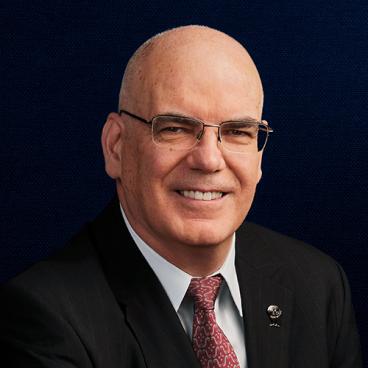
David Alexander is a professor of astrophysics at Rice University and a Rice faculty scholar at the Baker Institute. Alexander also serves as the director of the Rice Space Institute. Alexander was awarded an Officer of the Order of the British Empire (OBE) by her majesty Queen Elizabeth II in June 2018 for services to the space industry, received a Presidential Early Career Award for Scientists and Engineers in 2004, and was appointed a Kavli Frontiers Fellow by the National Academy of Sciences in 2006. He is former chair of the Solar Physics Division of the American Astronomical Society and has served on many professional committees including the NASA Advisory Council’s Heliophysics Subcommittee and the NASA Solar Heliospheric Management and Operations Working Group.
Overview
Astrophysicist David Alexander introduces the Sun as our closest and most important star. Beginning with a look at how humanity’s understanding of the cosmos has evolved, he traces the scientific shift from early geocentric models to the heliocentric theory that placed the Sun at the center of our solar system: a historical transition that reshaped our view of the universe and set the stage for modern astronomy.
With this foundation, Professor Alexander then turns to the Sun itself, explaining what makes the Sun a star and exploring its structure—from its core to its outer layers to its dynamic surface. Learn how the Sun generates energy, how solar activity shapes life on Earth and drives space weather, and how we are using modern technology to study solar science today.